Archives

Vistech celebrating region’s new Community Champions

Vistech celebrating region’s new Community Champions

Vistech celebrating region’s new Community Champions

The inaugural Best New Tees Business Awards will be a “brilliant” event to “inspire” the next generation of new businesses and entrepreneurs, says the MD of a firm that’s sponsoring the Community Champions category.

Organised by Tees Business in association with PD Ports, the awards will take place within the marquee of Kirkleatham Walled Garden, near Redcar, on the evening of Thursday November 11.

The awards attracted more than 100 entries and nominations – and category sponsors have now chosen the final three in each category.

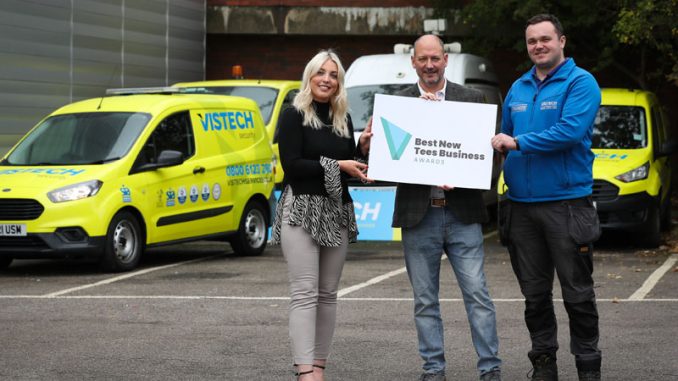
Vistech is sponsoring a Best New Community Champions category which will see Beth Hodgson’s Redcar Cleveland & Beyond, Kay Coleman & Associates and Engineering Together fighting for the winners’ gong.

Vistech managing director Chris Taylor said: “Celebrating the best new businesses in our area will inspire those future entrepreneurs and employers.

“We chose to sponsor the Community Champions Award specifically as Vistech is very much a company which invests in and gives back to the local community.”

Client relationship manager Danielle Butler added: “Vistech is proud to be part of in inaugural Best New Business Awards and the Community Champions Award is a perfect fit for with all the charitable and community-based work we carry out.

“Vistech is very much at the heart of the Teesside community which goes hand-in-hand with being one of the area’s largest employers.”

Danielle and Vistech engineer Ryan Aspland are pictured with Dave Allan, director of event organisers Resolution Media and Publishing, creators of Tees Business.

Vistech are Gold Standard with Middlesbrough Football Club

Vistech are honoured to be Gold Members of the Middlesbrough Football Club Foundation.

MFC Foundation is the independent charitable arm of Middlesbrough FC, working across Teesside to raise aspirations and change lives for the better. We work with over 35,000 disadvantaged people every year to help make Teesside a better place to live, learn, work and play.

We rely heavily on the generous support of our local business community to help us achieve our mission. In response to corporate feedback we introduced our Friends of the Foundation scheme.

Friends of the Foundation donate a minimum of £500 a year and help us in a number of ways, including:

Increasing the funding available to support disadvantaged people in Teesside
Helping us plan for the future growth of the charity

https://mfcfoundation.co.uk/get-involved/friends-of-the-foundation/

Vistech MFC Foundation partners driving security at Waste Knot Energy

Vistech MFC Foundation partners driving security at Waste Knot Energy

Teesside businesses have come together as part of a collective drive to enhance security at the Waste Knot Energy Centre in Middlesbrough.

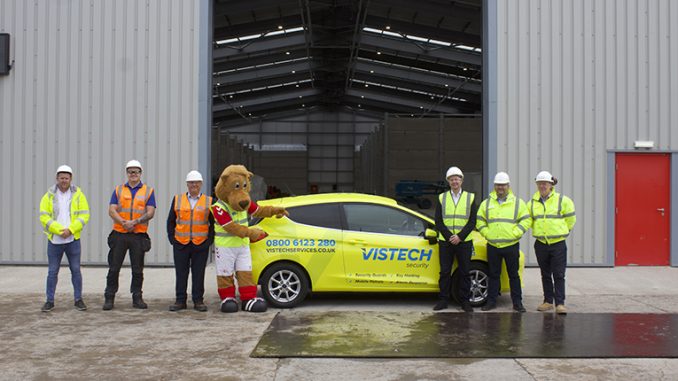
Vistech Security and Cornerstone Business Solutions, whom both have gold member status with the MFC Foundation, partnered together under the foundation to supply specialist CCTV at the energy centre, which produces 250,000 tonnes of SIRF pellets a year from waste.

Having recently moved into premises in the port of Middlesbrough, Waste Knot – based at Riverside Park Road – deemed the security of the new energy centre as crucial.

Having recently received gold member status this year with the MFC Foundation, Vistech – based locally and accredited to SIA ACS Pacesetters Status, SSAIB, ISO 45001, ISO 14001, and ISO 9001 – quickly designed and installed the specialist CCTV systems to combat break-ins and intruders at the site.

Paul Heeran, Vistech Security operations director, said: “Being a service partner of Cornerstone, who are also MFC Foundation gold members, we were provided with the opportunity to work on the Waste Knot Project and welcomed the chance to support a local company demonstrating outstanding environmental awareness.

“A particular practice that resonated with us was the use of non-recyclable plastic to produce pellets ensuring these plastics do not end up on landfill sites or in waterways.

“We are very proud to be providing CCTV systems on this project in partnership with Cornerstone and to be associated with Waste Knot Energy. This is a fantastic opportunity to celebrate our MFC Foundation membership renewal, and to showcase our excellent partnerships.”

Chris Bibby, Cornerstone’s sales director, added: “This is the first big project that we have taken on with Vistech, but I had heard good things about them from a previous project they had worked on.

“From start to finish they were professional, efficient and the project has been completed to a very high standard. Looking forward to the next project we work on together.”

CCTV Operator Course NOW ONLY £200!

CCTV Operator Course NOW ONLY £200!

CCTV Operator Training

For a limited time only the Highfield level 2 CCTV Operator Training Course is available for ONLY £200, this special offer is valid on the next course which commencing on Tuesday 16th March!

The SIA CCTV Operator Licence enables you to work as a CCTV operator. CCTV Operators usually work in a control room which is connected to a wide array of camera footage. Employers typically include security companies, medium-large corporations, local councils.

According to the British Security Industry Authority (BSIA), the UK has an estimated 5.9 million CCTV cameras. Behind these cameras are CCTV Operators viewing and observing footage and images to keep property and the public safe.

Obtaining the level 2 CCTV Training qualification is the first step towards obtaining an SIA Licence. If you are looking to work as a CCTV operator, this is the right qualification for you.

Next Course Date:
Tuesday 16th – Thursday 18th March 2021

Middlesbrough training centre

Address:
Boho Six Offices, 5 Linthorpe Road, Middlesbrough, TS1 1RE
(Use TS1 1SR for Google Maps, next to Zetland Car Park)

Parking:
Zetland Car Park, TS1 1SR, pay and display. Open 0700 to 1900 daily.

Public transport:
located over the road from Middlesbrough Train Station and 5 minute walk from Middlesbrough Bus Station.

For more information or to book a training course please contact our training team on 0800 6123 280 or email training@vistechservices.co.uk

Vistech Security are setting the pace

Following another highly successful SIA Approved Contractor Scheme (ACS) audit carried out in 2020, we are now members of a select group of security services suppliers, namely The ACS Pacesetters. This is an independent body whose membership is made up of Contract Security Guarding Companies who are in the top 15% benchmarking and achievement levels set by the Security Industry Authority Approved Contractor Scheme.

Membership allows us to apply for the SECURITY OFFICERS OF DISTINCTION awards.

Paul Heeran, Vistech Services, Operations Director, said, “This is a fantastic opportunity for us to feature some of the great work that is carried out by Vistech employees. Throughout this last year, security officers have carried out a vital role in keeping property and individuals safe and unfortunately on many occasions have been the target of violence and aggression. We would like to recognise and reward those officers who have gone above and beyond in their duties during this very difficult period.”

Chris Taylor, Vistech Services, Managing Director added, “For Vistech to be recognised by the ACS as Pacesetters is a great endorsement of not only our growth as a company with nearly 200 employees across the UK but also of our consistency in providing an excellent standard of service to our clients.”

What is the difference between a Door Supervisor and a Security Guard SIA Licence.

What is the difference between a Door Supervisor and a Security Guard SIA Licence.

Ever since the SIA gave people a choice between the two licences in 2005 this has been a question which has caused much discussion. The roles of a SIA Door Supervisor and a Security Guard are often the same in the minds of the public. However, they serve different functions and are better suited to different situations. There are also legal requirements that you must take into consideration. Knowing the differences between the two roles ensures that you make the right choices when deciding which training course to take and which SIA licence to apply for.

Anyone who holds a SIA Door Supervisor licence can undertake any of the roles covered by a Security Guard licence. This is clearly shown on the SIA website in the licencing integration section.

So what are the advantages of holding a Door Supervisor Licence rather than a Security Guard licence, especially if you have no intention of working in a pub or club? The short answer is that you will have greater job opportunities and be seen as more versatile by most potential employers. Consider the following, a Door Supervisor licence is not only required to work in pubs and clubs it is also needed to work in any establishment where alcohol is sold for consumption on the premises, for example in Hotels, Restaurants, Theatres, Cinemas and Casinos.

An SIA Door Supervisor Licence is a legal requirement on premises where alcohol is going to be served. Their training specifically covers the common variables that door supervisors will face every day. This includes conflict management skills and physical intervention skills. As such, they are trained to deal with those who are intoxicated and potentially violent
Traditional Security Guards with basic licences are ideal for environments that don’t serve alcohol and where security must be maintained. For instance, patrolling, securing, and monitoring business premises out of hours is a key role that many security guards undertake.

It important to be aware of the restrictions on CCTV use for standard security guards. While they are permitted to use CCTV to identify trespassers and protect property, they are not permitted to use it to monitor the activities of the public or to identify a particular person. A public Space Surveillance (CCTV) licence would be required for this, and therefore standard security guards aren’t permitted to work in public spaces such as shopping centres.

Whilst it is not necessary for a Door Supervisor or a Security Guard to have academic qualifications, it is necessary to obtain training to provide the framework for a complete understanding of the role, and to enhance the skills and approach of the individual towards the security industry. In completing your training, you will be authorised to apply for your SIA licence. It is illegal to work in the security industry without the proper licencing or training is a criminal offence that could result in high fines or prison. Hiring unlicenced staff is also against the law, and the employer will also be punished by law.

Vistech Training would always strongly recommend to all that are considering the Security Officer training course that they consider the Level 2 Award for Working as a Door Supervisor within the Private Security Industry course instead.

NASDU Level 2 Patrol Dog Handler Course

NASDU Level 2 Patrol Dog Handler Course

You could earn upto £20 per hour working in the Private Security Industry as a Security Dog Handler.

Our Next NASDU Level 2 Patrol Dog Handler Course will take place this coming Monday 1st February and we only have 3 PLACES LEFT available.

Contact our training team to find out more and to ENROL TODAY!

Call : 0800 6123 280
Email: training@vistechservices.co.uk

Next Course Date: Monday 1st to Friday 5th February
Course Times: 8.30AM – 5.30PM Daily
Course Cost: £995(£100 deposit to secure a place)

The NASDU Level 2 Patrol Dog Handler training course covers four units over the five days which include:

Roles & Responsibilities of a Patrol Dog Handler
Control of a Patrol Dog
Controlling a General Purpose Patrol Dog
Health, well-being & Safety of a Patrol Dog

Once qualified, you will be eligible to apply for jobs in roles within the private security industry as a Security Dog Handler.

For a quote or further information call our head office on 0800 6123 280(24HR)or email training@vistechservices.co.uk

Using Thermal Camera’s In The Fight Against Covid-19

Using Thermal Camera’s In The Fight Against Covid-19

Using Thermal Camera’s In The Fight Against Covid-19

I think we can all agree 2020 was a year of unprecedented times that have seen a shift in how technologies are used throughout the UK. We have seen in our previous blog “Evolving Technology in line with changing security requirements” the new technologies that have been implemented throughout the coronavirus pandemic across the globe. However, we wanted to look at in more detail the benefits of thermal camera’s and how they have been used across the world to help the battle the ongoing pandemic.

It has become apparent that the faster the person is identified as being symptomatic the faster they can be tested and treated if positive, and the slower the rate of infection within your working environment.

Where, before, we would usually see them in areas of high footfall, now small companies and officers are also turning to the solution to enable the smooth reintroduction to everyday operations whilst staying in control of the spread of infection.

The cameras use infra-red (IR) to read an object temperature. Every object with a temperature above absolute zero emits a certain amount of radiation (IR), so the higher the temperature, the higher the level the level of radiation will be. A normal human’s temperature varies anywhere between 36.5 -37.5 anything above is considered as a fever.

As a result of this thermal cameras are specifically designed to read this radiation using an algorithm and then display corresponding images with coloured heat zones and temperature scales. If a pre-alarm set temperature is exceeded, then this causes an alarm so you can follow the protocols you will have in place upon identifying a symptomatic individual.

Here are the notable advantages of using thermal cameras in your school, office, or commercial building:

• It takes less than a second to screen an individual.
• There is very little set up required to install.
• Easy to deploy anywhere you need it (most common in entrances).
• Protects Public Health – Demonstrates that you are activity taking precautions.
• Convenient and Non-Disruptive – causes minimal disruption to your building.
• AI Detection – there is less chance of false alarms from detecting other heat sources.
• Test one or many at once – a choice of cameras can test one or multiple people at once.
• Highly Accurate – Accuracy is standard cameras is +0.5°C but can be calibrated to +0.3°C.
• Contactless- Measurements can be taken up to 3 metres away so it will not impact social distancing.
• Quantitative tool to stay in control – You can opt to record and keep the data it measures.

Automatic thermal cameras are safer and more cost-effective than a person with a handheld temperature gun. Many people say that being approached by a someone holding a handheld thermometer makes them feel uncomfortable. Usually, they cannot effectively take your temperature without standing extremely close to you which is an avoidable risk for them and for the end recipient. Even when wearing masks, standing at least a metre away is an important element in stopping the spread of the virus.

Thermal cameras demonstrate a public and reassuring commitment to health and safety. The primary role of thermal cameras is undoubtedly to improve public health. But they have another, important impact as a business employing effective thermal imaging technology is a business that is publicly demonstrating that it is well-organised and committed to health and wellbeing of its staff and others.

Cameras are one measure among many, but they are not an insignificant one. As the world grows more aware of the risks and ways to prevent the spread of Covid-19, camera solutions will be adopted by businesses, governments, and other organisations across the UK and globally.

If deployed with appropriate social distancing, mask wearing and hand washing, thermal cameras can be a powerful part of the fight to control coronavirus.

How to obtain an SIA Licence

How to obtain an SIA Licence

How to obtain an SIA Licences

The Security Industry Authority (SIA) is the regulator for the UK private security industry and issues SIA Licences. It has two main duties: the compulsory SIA licensing of individuals undertaking designated activities within the private security industry; and management of the Approved Contractor Scheme (ACS), which assesses industry suppliers against certain industry criteria.

The SIA ensures that licensed security operatives are properly trained and qualified to carry out their job, with licensing covering areas such as manned guarding, key holding, vehicle immobilising, CCTV operation and door supervision.

Available SIA Licenses

Cash and valuables in transit – this license is required when guarding property against destruction, damage, theft and involves the secure transportation of property in vehicles specially manufactured (or adapted) for such purposes.

Close Protection – this license is required when guarding one or more individuals against assault or injuries that might be suffered because of the unlawful conduct of others.

Door Supervisors Licence (Door Supervision) – this license is required if manned guarding is undertaken in relation to licenced premises.

Public Space Surveillance (CCTV) – this licence is required when manned guarding is carried out through the use of CCTV (e.g. the CCTV operator) to monitor the activities of members of the public, or to identify a person.

Security Guard – this license is required when manned guarding activity does not fall under the descriptions of door supervision, close protection, cash and valuables in transit, or public space surveillance (CCTV) is undertaken.

A key-holding licence is required when keeping custody of, or controlling access to, any key or similar device for operating a lock, with certain qualifications.

In July 2016, the SIA introduced a new online licencing system, allowing individuals to register for online accounts and apply for or renew licences online. The website also allows individuals to change their personal details remotely.

SIA approved contractors have access to Licence Management and Licence Assist services, allowing them to apply online on behalf of consenting staff. The Licence Assist service also keep employers informed when a licence is granted to one of their employees and allows employers to check the licence status of licence-holders. Providing all the same benefits, the licence management services allows employers to carry out identity checks for new applicants without having to visit a post office and allows employers to update their employee’s details on their behalf.

How much does an SIA licence cost?
The cost of an SIA licence application to individuals has been reduced from 1st April 2020. Individual licences for all sectors will cost £190, down £20 from £210, licences last for three years.

A front-line vehicle immobiliser licence runs for just one year for the same price. The reduction applies to both new applicants and anyone renewing existing licences.
Covering the cost of processing the licence application, this fee is non-refundable. A licence holder paying the fee themselves can claim tax relief against their taxable income.

SIA Licence Training
To secure a front-line SIA license you must offer evidence that they are properly qualified to do their job. This means obtaining an SIA-endorsed qualification.
Different qualifications are needed for different licences, which the SIA details on its website, covering the training needed for:

Cash & Valuables in Transit
Close Protection
Door Supervisors
Public Space Surveillance (CCTV)
Security Guards
Vehicle Immobilisers

There are no training and qualifications required for a specific key holding licence, however, be aware that callouts may result in the undertaking of additional activities that would need to be covered by the appropriate front line licence.

The above information could change at any time. It is important to stay up to date with SIA updates around licencing information by signing up to SIA emails, so that you aren’t caught out.

Emergency First Aid Training ONLY £50!

SIA Licence Holders Need Emergency First Aid Training

Ensure you are compliant by completing your Emergency First Aid Training NOW!

We have last minute training places available this Monday 11th January 2021 at the special price of ONLY £50! Beat the rush and ensure you can continue to work within the Private Security Industry.

PLACES ARE LIMITED CALL NOW : 0800 612 3280

The importance of first aid training for security personnel cannot be overstated, so news of the SIA’s decision has been well-received by those in the industry. By ensuring that all new licence holders receive first aid training will raise standards going forward.

The Emergency First Aid at Work course is suitable for people aged 16+ who might need to provide first aid to someone who is injured or becomes ill in an emergency while at work. The Emergency First Aid at Work training course covers a range of basic lifesaving first aid skills and techniques, designed to ensure the learner has a comprehensive knowledge base in this area.

Successful candidates who complete the Emergency First Aid at Work course, will become formally qualified emergency first aiders. Subsequently they will receive the nationally recognised Emergency First Aid a Work Certificate which is valid for three years.

Emergency First Aid at Work Course Content

During the one-day course you will cover six units, these unites ensure learners have a basic understanding of life saving skills and techniques, the course units you will cover include:
1: Taking Charge & Summoning Help.
2: Priorities in First Aid.
3: Control of Bleeding.
4: Epilepsy.
5: Poisoning.
6: Burns and Scalds.
Course Location: All our Emergency First Aid at Work Training Courses take place at our state-of-the-art Middlesbrough Training Centre